
Crystal Lake Monitoring
Gray, Maine — Ongoing annual water quality monitoring and reporting at Crystal Lake have shed light on the causes of emerging stress in the lake.

When the Crystal Lake Association contacted Ecological Instincts in 2022, members were concerned about changes they were observing in the water quality of the 189-acre lake. Crystal Lake (also known as Dry Pond) is listed on the Maine Department of Environmental Protection’s (DEP) Nonpoint Source (NPS) Priority Watersheds list because it is sensitive to additional phosphorus inputs due to its hydrology and development within the watershed. The lake is also included on the DEP’s list of Lakes Most at Risk from New Development.
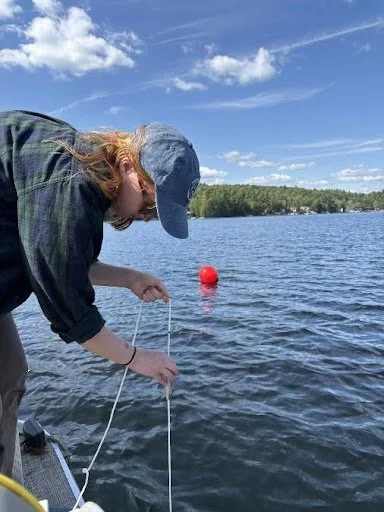
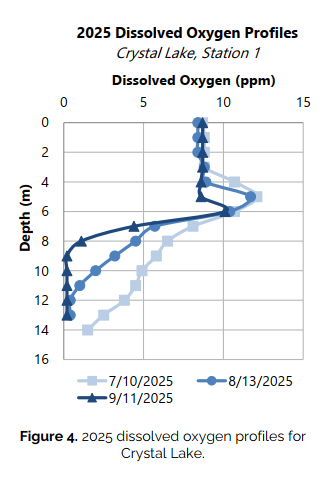
To better understand the changes observed in water quality, the Crystal Lake Association hired Ecological Instincts to collect monthly water quality samples and prepare annual monitoring reports. Parameters measured include phytoplankton and zooplankton, water clarity, dissolved oxygen, temperature, total phosphorus (epilimnetic and grab samples), chlorophyll-a, conductivity, pH, alkalinity, and color.
Results from multiple years of data collection indicate that Crystal Lake responds strongly to climate variability, with some years exhibiting better water quality than others. Years with below-average water quality were correlated with shorter durations of ice cover and heavy precipitation events that deliver excess phosphorus to the lake.